 Cart is empty
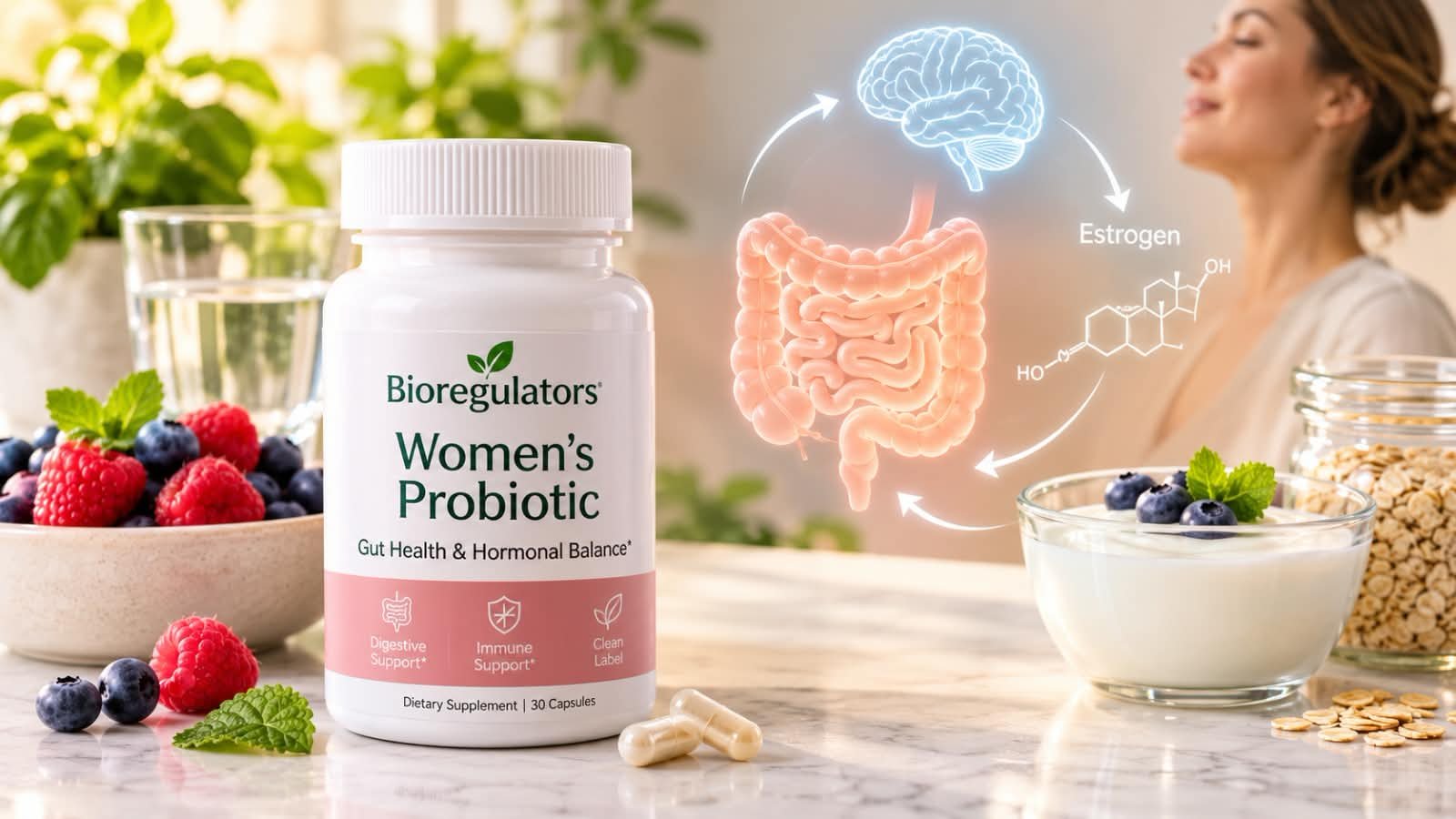
Hormonal health is not determined by the ovaries alone. Gut health and hormones are connected through a complex biological relationship involving intestinal bacteria, estrogen metabolism, immune signalling and the body’s natural detoxification pathways.
A woman may notice digestive discomfort, bloating or changes in her menstrual experience while also navigating hormonal transitions. Although these symptoms do not necessarily share one cause, emerging research suggests that the gut microbiome deserves greater attention in conversations about women’s hormonal health.
One particularly interesting discovery is the estrobolome: a collection of gut microbial genes involved in processing estrogen.
Understanding this connection helps explain why maintaining a healthy intestinal environment matters beyond digestion.
The Gut–Hormone Connection: More Than Digestion
The gut is home to a diverse community of microorganisms collectively known as the gut microbiome. These microorganisms participate in several physiological processes, including:
- Breaking down dietary components.
- Producing short-chain fatty acids.
- Supporting intestinal barrier function.
- Communicating with the immune system.
- Metabolising certain hormones and other biological compounds.
The relationship works in both directions. Hormones can influence the intestinal environment, while microbial activity can influence how the body processes certain hormones.
This is particularly relevant to estrogen, one of the major reproductive hormones in women.
However, an important distinction matters: gut bacteria do not produce the ovarian hormones responsible for the menstrual cycle. Instead, they can influence how the body processes and recycles estrogen after it has been produced.
That distinction is central to understanding the science.
Meet the Estrobolome: The Missing Link in Estrogen Metabolism
The estrobolome is the collection of bacterial genes in the gut involved in estrogen metabolism.
Researchers have identified microbial enzymes, particularly beta-glucuronidase (β-glucuronidase), that participate in the processing of estrogen compounds.
To understand why this matters, consider what happens after estrogen circulates through the body.
The liver metabolises estrogen through processes such as glucuronidation. This makes certain estrogen metabolites more water-soluble, allowing them to be transported into bile and delivered to the intestine.
Once in the intestinal environment, bacterial enzymes can remove the glucuronide group from some of these compounds.
This process is called deconjugation.
The resulting estrogen compounds may become available for intestinal reabsorption and return to circulation through the portal blood and liver.
This process is known as enterohepatic circulation.
Why does this matter?
Because microbial enzyme activity can influence how much estrogen is recycled rather than eliminated.
A change in the composition or function of the gut microbiome may therefore affect estrogen availability.
However, this does not mean that higher or lower bacterial activity automatically produces an unhealthy estrogen level. The relationship is more complex and depends on several host and microbial factors.
Research published in Molecular Nutrition & Food Research in 2024 discusses these mechanisms and the role of gut bacteria in estrogen and phytoestrogen metabolism.
How Gut Imbalance May Influence Hormonal Regulation
Bioregulators Women’s Probiotic
₨2,499.00Gut microbiome imbalance, often called dysbiosis, refers to changes in microbial composition or function that may negatively affect normal intestinal processes.
It is not a single diagnosis, and there is no universal microbiome profile that defines perfect gut health.
Nevertheless, several biological pathways deserve attention.
1. Altered Estrogen Recycling
Changes in microbial beta-glucuronidase activity may influence the amount of conjugated estrogen that is converted back into a form available for absorption.
If this process changes, estrogen metabolism and circulating estrogen availability may also be affected.
Importantly, the effect is not always predictable. The goal should not be to suppress or increase this enzyme indiscriminately.
The objective is to understand the wider metabolic environment.
2. Reduced Production of Beneficial Microbial Metabolites
Certain intestinal bacteria ferment dietary fibres and produce short-chain fatty acids (SCFAs), including:
- Acetate
- Propionate
- Butyrate
Butyrate is particularly important because it serves as an energy source for colonocytes, the cells lining the colon.
These metabolites also participate in intestinal barrier maintenance, immune regulation and metabolic signalling.
When dietary fibre intake is consistently inadequate or microbial diversity is disrupted, the production of these metabolites may change.
This can influence the intestinal environment and contribute to inflammatory signalling.
3. Intestinal Barrier and Immune Function
The intestinal barrier controls what passes from the digestive tract into the body’s internal environment.
It consists of epithelial cells, mucus, immune components and supporting structures.
When this barrier becomes compromised, microbial products such as lipopolysaccharides (LPS) may interact more extensively with immune pathways.
This can contribute to inflammatory responses.
Although inflammation and hormonal regulation interact, it would be inaccurate to claim that intestinal permeability directly causes estrogen imbalance in every woman.
The relationship requires further clinical investigation.
Why Women’s Hormones and Gut Microbiome Change Together
Hormonal patterns naturally change throughout a woman’s life.https://pubmed.ncbi.nlm.nih.gov/?term=From+Gut+to+Hormones+Unraveling+the+Role+of+Gut+Microbiota&utm_source=chatgpt.com
The menstrual cycle, pregnancy, postpartum changes and menopause all involve different endocrine environments.
Estrogen itself can influence intestinal physiology and microbial composition. In turn, microbial metabolism may affect certain aspects of estrogen availability.
This creates a bidirectional relationship.
For example, during menopause, declining ovarian estrogen production is associated with changes in several physiological systems. Researchers are investigating whether changes in the gut microbiome contribute to some of these metabolic and inflammatory changes.
A 2025 review in The Journal of Sexual Medicine also discusses the potential role of prebiotics and probiotics in the menopausal gut microbiome.
However, the evidence is still developing.
A 2026 systematic review and meta-analysis published in Frontiers in Endocrinology found no significant differences in several major microbiome diversity measures between hypoestrogenic and comparison groups.
This finding highlights an important point: the relationship between hormones and gut bacteria is not uniform across all women.
Individual biology, age, diet, medications and other lifestyle factors matter.
What Can Support a Healthier Gut Environment?

Rather than trying to manipulate estrogen through supplements, a more sensible approach is to support normal digestive and microbial function.
Our preferred starting point is a consistent, food-first approach.
Prioritise Diverse Dietary Fibre
Dietary fibre provides important substrates for intestinal bacteria.
Include a variety of foods such as:
- Oats and whole grains.
- Beans and lentils.
- Vegetables and leafy greens.
- Apples, berries and other fruits.
- Nuts and seeds.
Different fibres support different microbial activities. Variety is generally more useful than relying on a single so-called superfood.
Include Fermented Foods Where Appropriate
Foods such as plain yoghurt and kefir can contain live microorganisms.
Their microbial content varies by product and processing method. Fermented foods should not automatically be considered equivalent to clinically studied probiotic supplements.
Maintain Consistent Daily Habits
Regular meals, adequate hydration, physical activity and sufficient sleep all contribute to general digestive and metabolic health.
No single habit can independently correct hormonal fluctuations, but consistency supports normal physiological function.
Probiotics and Hormonal Health: What Should You Look For?
Probiotics are live microorganisms that provide a health benefit when administered in adequate amounts.https://pubmed.ncbi.nlm.nih.gov/?term=estrobolome+estrogen+metabolism&utm_source=chatgpt.com
However, not all probiotics have the same effects.
A product that supports digestive health should not automatically be marketed as a treatment for estrogen imbalance, PCOS, irregular periods or menopause symptoms.
When evaluating a probiotic formula, our clean-label selection framework focuses on five areas:
1. Strain Identification
Look for the full strain designation, not simply a broad label such as Lactobacillus. Different strains can have different properties.
2. CFU Transparency
CFU means colony-forming units. A responsible manufacturer should clearly state the viable microorganism count and whether the declared amount is guaranteed through the end of shelf life.
3. Stability and Viability
Manufacturing, moisture exposure, temperature and storage conditions can affect the survival of live microorganisms.
4. Ingredient Transparency
Examine the complete ingredient list, including sweeteners, carriers, flavouring agents and other excipients. A clean-label claim should be supported by the actual formulation.
5. Evidence Matching
The scientific evidence should match the specific strain, dose and intended benefit. Findings from one probiotic strain cannot automatically be transferred to another.
At Bioregulators, transparency in product selection is an important part of our approach to everyday nutritional support.
Explore the Bioregulators Women’s Health and Probiotics Collection to learn more about the available range
When Digestive Symptoms Should Not Be Dismissed
Bloating, constipation and changes in bowel habits are common experiences, but they do not automatically indicate hormonal imbalance or microbiome dysbiosis.
Similarly, irregular menstrual cycles can have several explanations, including normal life-stage changes and underlying medical conditions.
Persistent digestive discomfort, unusually heavy menstrual bleeding, significant cycle changes or unexplained symptoms deserve appropriate medical assessment.
A probiotic should never replace an evaluation of possible underlying causes.
Understanding the difference between digestive symptoms and hormonal symptoms helps prevent unnecessary self-treatment.
The Future of Women’s Gut and Hormonal Research
The estrobolome is an exciting area of scientific investigation, but several questions remain unanswered.
Researchers still need better longitudinal human studies that measure microbial genes, enzyme activity, circulating estrogen metabolites and meaningful clinical outcomes together.
Future research may also help explain why two women with apparently similar diets and microbiome profiles can experience very different hormonal patterns.
For now, the most responsible approach is to support digestive health without promising that changing the gut microbiome will correct every hormonal concern.
[INSERT IMAGE: Actual Bioregulators Women’s Probiotic bottle beside its verified Supplement Facts panel or a scientifically accurate estrobolome pathway infographic.]
A Better Perspective on Gut and Hormonal Health
The gut is not simply a digestive organ. It is an active metabolic and immune environment that communicates with multiple systems throughout the body.
The estrobolome offers an important example of this relationship by showing how intestinal microorganisms participate in estrogen metabolism and enterohepatic circulation.
Yet good science requires distinguishing biological possibility from proven clinical outcomes.
At Bioregulators, we believe nutritional decisions should begin with ingredient transparency, scientific evidence and realistic expectations.
Supporting gut health is not about forcing hormones into a particular range. It is about giving the body the nutritional foundations needed to maintain its normal functions, one consistent habit at a time.
Frequently Asked Questions
1. Can poor gut health affect estrogen levels?
Gut bacteria participate in estrogen metabolism through enzymes such as beta-glucuronidase. Changes in microbial activity may influence estrogen recycling and availability, although the clinical effects vary between individuals.
2. What is the estrobolome?
The estrobolome refers to the collection of gut microbial genes involved in estrogen metabolism. It contributes to the processing and recycling of certain estrogen compounds through enterohepatic circulation.
3. Can probiotics balance female hormones?
Probiotics can support specific aspects of digestive and microbial health, depending on their strains and formulation. However, there is currently insufficient evidence to claim that general probiotic supplements reliably balance reproductive hormones.
4. Does estrogen affect the gut microbiome?
Yes. Estrogen and the gut microbiome have a bidirectional relationship. Hormonal changes can influence the intestinal microbial environment, while microbial metabolism can affect estrogen availability.
5. What foods support gut microbiome health?
Fibre-rich foods such as vegetables, fruits, oats, legumes, nuts and seeds provide substrates for beneficial intestinal bacteria. Fermented foods such as plain yoghurt may also contribute live microorganisms.
Scientific Reading
- Kumari et al. (2024). From Gut to Hormones: Unraveling the Role of Gut Microbiota in (Phyto)Estrogen Modulation in Health and Disease. Molecular Nutrition & Food Research.
- Saravinovska et al. (2026). The Impact of Estrogen Status on the Gut Microbiome: A Systematic Review and Meta-Analysis. Frontiers in Endocrinology.