
 Cart is empty

For decades, modern dermatology operated under a strict boundary: what you applied on your skin stayed on your skin, and what you digested stayed in your gut. Topical retinoids, hyaluronic acid serums, and peptide creams dominated anti-aging regimens. Yet, millions of individuals invested heavily in high-end topicals while continuing to battle persistent skin dullness, barrier compromise, and accelerated fine lines.
The missing link is not another multi-step serum. It is the internal ecosystem governing systemic inflammation and structural integrity.
Emerging clinical research demonstrates that skin vitality is fundamentally tethered to gastrointestinal health via a bidirectional communication network known as the gut-skin axis. When intestinal dysbiosis occurs, systemic inflammatory cascades accelerate collagen breakdown. Addressing skin aging successfully requires shifting the paradigm from superficial correction to internal biological regulation.
Deconstructing the Gut-Skin Axis
The gut and the skin share remarkable developmental and functional similarities. Both serve as primary barrier interfaces separating internal physiology from the external environment.
When the gut mucosal lining weakens—often due to processed diets, chronic stress, or environmental toxins—undigested food particles and microbial byproducts can slip into circulation. This triggers a low-grade systemic inflammatory response driven by pro-inflammatory cytokines such as tumor necrosis factor-alpha (TNF-α) and interleukin-6 (IL-6).
In cutaneous tissues, these circulating inflammatory mediators accelerate the degradation of the extracellular matrix. Fibroblasts—the specialized cells responsible for producing structural collagen and elastin—undergo oxidative stress, leading to:
- Diminished skin elasticity
- Compromised skin barrier defense
- Accelerated wrinkle formation
According to research published by the National Institutes of Health (NIH) Office of Dietary Supplements, targeted nutritional interventions that modulate gastrointestinal microbial composition offer systemic benefits, influencing everything from metabolic efficiency to cutaneous tissue repair.
Beyond Topicals: How Targeted Probiotics Protect Dermal Structure
Traditional anti-aging skincare attempts to rebuild the dermal matrix from the outside. However, topical molecules frequently struggle to penetrate past the stratum corneum into the deeper dermal layers where collagen synthesis actually occurs.
Oral probiotics approach skin longevity from the inside out by altering microbial metabolites.
When beneficial bacterial strains—such as specific Lactobacillus and Bifidobacterium species—colonize the intestinal tract, they ferment dietary fibers into short-chain fatty acids (SCFAs), most notably butyrate.
Butyrate acts as a potent signaling molecule that:
- Reinforces tight junctions in the gut epithelium.
- Helps support the intestinal barrier and regulate inflammatory signaling.
- May influence systemic inflammatory pathways associated with skin health.
Recent clinical trials evaluating multi-strain oral probiotic interventions, including Lactobacillus rhamnosus and Lactobacillus plantarum variants, have investigated their potential effects on skin health.
Participants tracked over eight to twelve weeks have been studied for improvements in several anti-aging endpoints, including:
- Reduced transepidermal water loss (TEWL)
- Enhanced epidermal hydration, measured via corneometry
- Changes in dermal density, assessed through high-frequency ultrasound imaging
Results can vary depending on the specific probiotic strain, formulation, and individual.
Practitioner’s Checklist: What to Look for in a Skin-Focused Probiotic
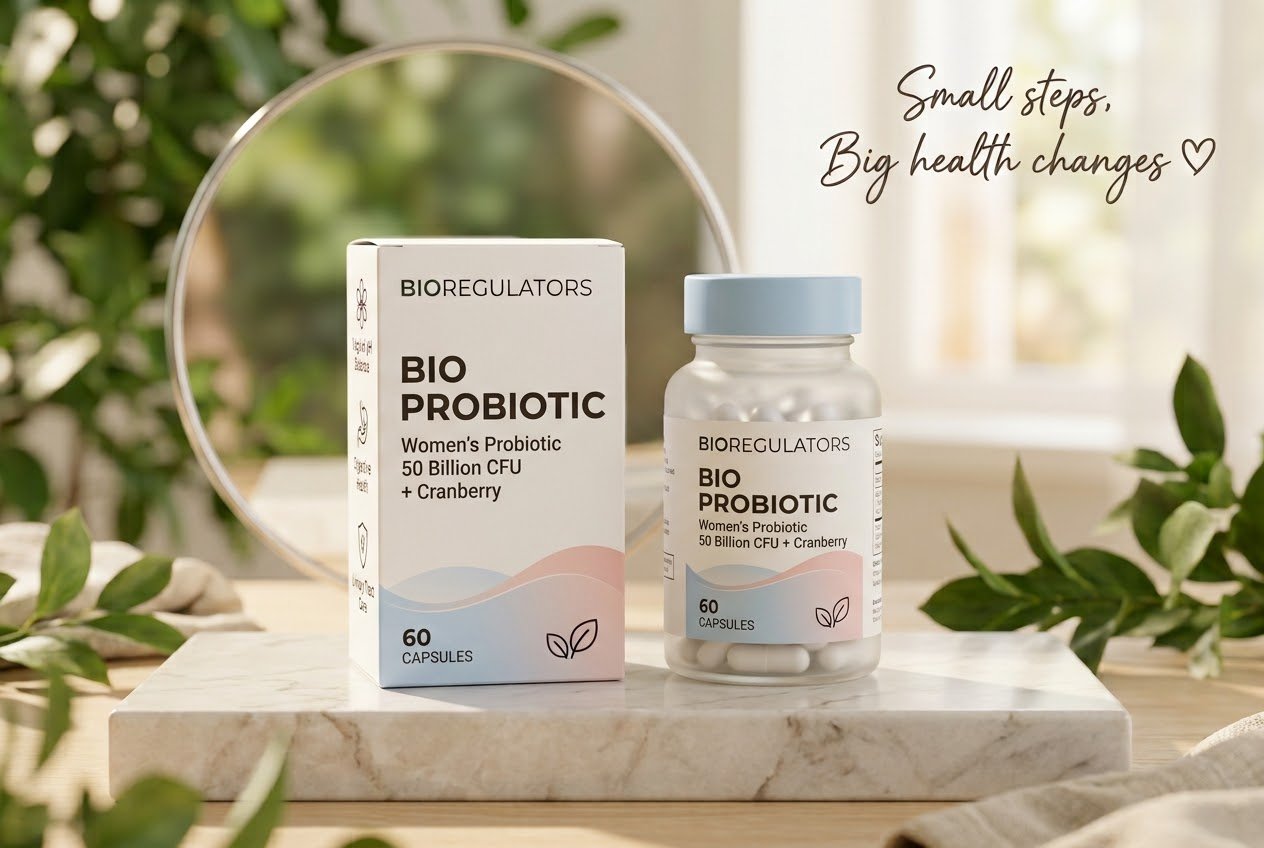
Bioregulators Women’s Probiotic
₨2,499.00Navigating the supplement aisle can be frustrating. Many commercial probiotics feature massive colony-forming unit (CFU) counts on the label while utilizing fragile strains that may lose viability during storage or passage through the stomach.
[INSERT: Formulation challenge — selecting acid-resistant encapsulation matrices to ensure live bacterial passage past gastric acid without synthetic chemical coatings.]
When evaluating a clean-label formula designed to support the gut-skin axis, apply this formulation checklist:
1. Strain Specificity
Look for clinically studied probiotic strains rather than generic species designations. Strains should be explicitly identified by their alphanumeric strain codes, allowing you to verify the relevant research.
2. Purity Standards
Check the ingredient list for unnecessary additives, including:
- Synthetic flow agents
- Titanium dioxide
- Artificial coloring
- Unnecessary fillers, including maltodextrin where avoidable
Remember that the presence of an ingredient does not automatically mean it causes intestinal inflammation. Evaluate the complete formulation and your individual needs.
3. Delivery Integrity
High-quality supplements may utilize delayed-release capsules, protective encapsulation, or other delivery technologies to help preserve bacterial viability during gastrointestinal transit.
The key is not simply a high CFU count. Look for verified strain identity, appropriate storage instructions, stability information, and evidence supporting the specific formulation.
Integrating Probiotics Into Your Daily Anti-Aging Regimen
Supplements cannot outpace a poor diet or chronic sleep deprivation, but they may complement a comprehensive approach to skin health.https://pmc.ncbi.nlm.nih.gov/articles/PMC10385652/?utm_source=chatgpt.com
Consistency matters. Following the product’s recommended daily use helps maintain a predictable supplementation routine, although individual results and the time required to notice changes can vary.
[INSERT: Customer feedback outcome — tracking skin hydration metrics and self-reported reductions in seasonal dryness after six weeks of targeted daily probiotic integration.]
How to Support Your Gut-Skin Routine
To build a sustainable routine, consider the following habits:https://doi.org/10.1080/19490976.2022.2096995?utm_source=chatgpt.com
- Take your probiotic consistently, following the manufacturer’s instructions for timing, food, and storage.
- Eat prebiotic-rich foods, such as oats, flaxseeds, leafy greens, onions, and legumes, to provide fermentable fibers that support beneficial gut microbes.
- Include healthy dietary fats, such as those found in nuts, seeds, olive oil, and avocados, as part of a balanced diet.
- Prioritize quality sleep to support normal skin repair and overall health.
- Maintain adequate hydration to support normal physiological functions and skin hydration.
Important: Not every probiotic needs to be taken with food, and room-temperature storage is not appropriate for every product. Always follow the specific product’s directions.
Exploring Advanced Bioactive Solutions
Building a sustainable, science-backed wellness regimen requires prioritizing ingredient transparency, product stability, and evidence-based formulations over marketing hype.
Exploring targeted, clean-label collections—such as the advanced formulations available through the Bioregulators Product Line—may help consumers compare ingredients and delivery approaches when selecting supplements to complement their wellness routines.
Before choosing a product, look for transparent ingredient lists, clearly identified strains, appropriate quality testing, and substantiated health claims.
Supporting radiant skin from within begins with informed choices, a balanced diet, and a consistent skincare routine.
Frequently Asked Questions
1. How long does it take for oral probiotics to improve skin hydration and elasticity?
Some clinical studies have reported changes in skin hydration or barrier measurements after four to eight weeks of probiotic use. However, results vary by strain and study, and this timeline is not guaranteed. Evidence for improvements in wrinkles, elasticity, and deeper dermal structure remains limited.
2. Can probiotics replace my topical anti-aging serums?
No. Probiotics should not be considered a replacement for topical skincare.
Topical products can directly support the skin’s outer barrier. Ingredients such as moisturizers, retinoids, and sunscreen have different roles in skin care, while oral probiotics are being investigated for their potential effects on gut health, inflammation, and selected skin outcomes.
A balanced approach may combine appropriate topical skincare with healthy dietary and lifestyle habits.
3. Do probiotics need to be refrigerated to remain effective?
Not necessarily. Storage requirements depend on the specific strains and formulation.
Some products are designed to remain stable at room temperature, while others require refrigeration. Follow the manufacturer’s storage instructions and check the product’s expiration date and viability information.
4. Are all probiotic strains beneficial for skin health?
No. Probiotic benefits are strain-specific. Evidence supporting one strain cannot automatically be applied to another strain of the same species.
Look for products that identify their strains clearly and provide research relevant to the particular skin outcome being claimed.
5. Can I take daily probiotics alongside my other morning supplements?
Many healthy adults can take probiotics alongside commonly used dietary supplements. However, compatibility depends on the products, medications, and individual health circumstances.
Consult a healthcare professional if you take prescription medications, have a weakened immune system, or have a serious underlying medical condition.
Final Takeaway: Healthy Skin Starts With an Informed Approach
The gut-skin axis offers an important area of emerging research, but probiotics are not a guaranteed anti-aging solution. The most effective long-term strategy combines evidence-based skincare, a fiber-rich and balanced diet, adequate sleep, sun protection, and carefully selected supplements when appropriate.
Leave A Comment